Lapsang Souchong ‘CIN’

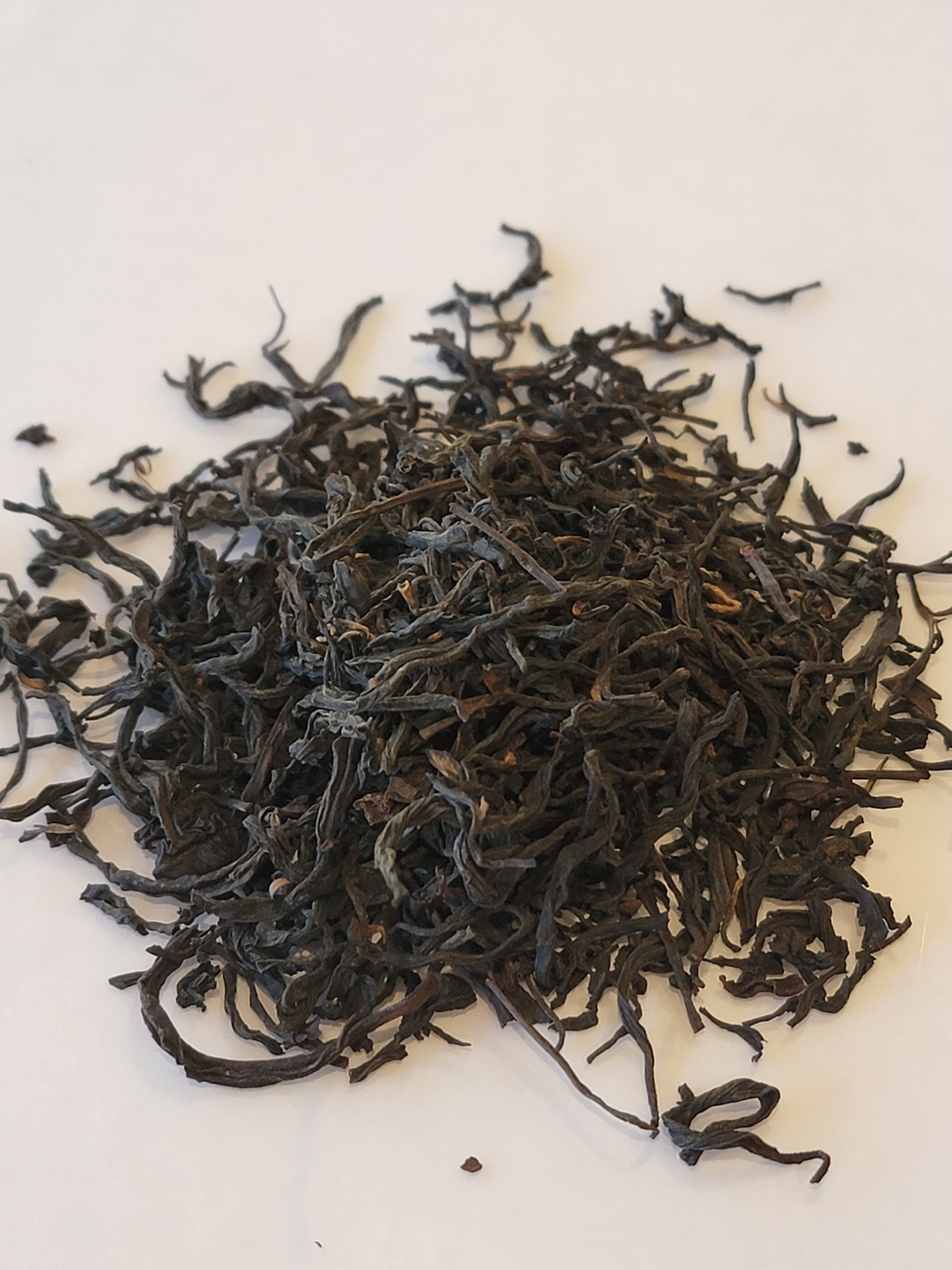
I love origin stories for tea, and lapsang souchong has a crazy one. Knowing this story helps develop a deeper love for black teas in general, promotes camaraderie between Asia and the West, and builds up one of my favorite teas: Jin Jun Mei
The Wuyi mountain range in northern Fujian China has an environmentally protected area that in teas is referred to as Zheng Yan. This area is just west of Wuyishan city. There is another tea for sale on this site (Zheng Yan Da Hong Pao) to also feature this area. Wuyi mountain teas are known to connoisseurs around the world and it is primarily Da Hong Pao and its fellow Rock Teas (Yan Cha) that are to thank for this outstanding reputation.
If you’re a citizen living in the Zheng Yan area, its likely you’re involved in tourism or tea in some capacity. While the yan cha’s are what made the area famous and continue to push this reputation today, there is another facet of production these days that is very exciting to talk about — Black tea.
To name the most important couple: Lapsang Souchong and Jin Jun Mei. They were conceived from the same iconic tea village called Tong Mu which is located in the far north of this protected zone on the border (albeit across a mountain peak) from the neighboring province of Jiangxi.
Tong Mu village is a peaceful place, it exists in a valley with rugged mountains on 3 sides and is so far away from anything of value that for the greater part of history it has been left alone. Here it should be mentioned that Jiangsu and Fujian historically aren’t the best of friends. During one battle Jiangxi decided rather than go around the mountains to invade Fujian, they would trek over them, and Tong Mu village was the first Fujianese resting spot for these tired soldiers.
It was the middle of the spring harvest, pickers were out gathering tea, the producers were beginning the withering process when all of a sudden a bunch of enemy soldiers show up. The farmers hid in the homes and factories and waited for the soldiers to pass. The soldiers are said to have used the piles of fresh tea leaves as beds and once rested; kicked the tea around to torment the Fujianese farmers. Once the soldiers left the area the farmers rushed out to survey the damage to their crops. The leaves were withered much further than usual and several were crushed by boots and considered by all to be in horrible condition. It was a disaster, but this tea represented the majority of the income these farmers could hope for in the year so they had to do what they could.
Tea is normally dried over charcoal because it provides adequate heat with little smoke. There was no time to prepare enough charcoal to dry the tea — pine wood was used instead. Anyone who has ever burned pine knows the beautiful aroma is makes, especially if the needles are included, but damn does it ever smoke a lot when the needles are included, and the wood hasn’t been properly dried. Nothing was going according to plan so far, and this step of drying this low-quality tea over such amazing amounts of smoke didn’t go so well for them either. The end result was a jet-black leaf with a powerful smokey scent.
No locals would drink this tea — no Chinese would drink this tea, but this was Fujian! The province with ports to a curious western world! A representative from Tong Mu brought this smokey black tea to the southern ports and pleaded with the exporters to get at least something for it. He received a very small amount of money and returned to the mountains.
Half a year later this smokey black tea arrived in Europe and was very well received — people loved it. You see, green tea deteriorates over time, there is a freshness that you just can’t keep. Especially when the tea is exposed to 6 months of sea air with no ability of vacuum sealing, temperature, or moisture control. This new black tea was not based on freshness, so there was nothing it could lose. If anything, the long journey dampened the fragrance of smoke and allowed it to blend better with the tea.
Half a year later there was a representative from Europe in Fujian looking for the source of this mysterious new smokey black tea. His journey took him to Tong Mu where he met the people of the village and explained that Europe wanted more of this tea and were prepared to pay a higher cost for it than green tea. The villagers were pleasantly surprised and have been creating smokey lapsang souchong ever since.
A couple things:
1) Not all lapsang souchong is smokey
2) Not all smokey teas are lapsang souchong
Europe, North America, and especially Russia are very fond of smokey black teas. India makes them, Japan makes them — anyone can make them. Cypress wood, cherry wood, yuzu tree wood, oak, bamboo — you can get smoke from any kind of wood. Pine was used in the case of Tong mu because pine is what they have an abundance of. I’d like to share an opinion that I think most connoisseurs of Smokey Lapsang Souchong can agree with: smoke is not the most important part.
Singpho Falap is a smokey tea from India. Now, admittedly I haven’t had so many but every one I’ve tried has almost made me gag and I can’t finish a pot. Imagine an ash tray full of cigarette butts, sitting out in the rain, and then you have to drink the water. Gross. The best I’ve had reminds me of that.
Japanese smoked teas are of a higher quality than India. I haven’t had any smoked teas from Japan I thought were unacceptable, but they also don’t deliver a wow factor like the upper tier teas from China do. The difference in quality is not about the smoke, it’s about the harmony of smoke and tea. This must be very hard to accomplish because I see it so rarely.
Not all lapsang souchong from China is created equal, first of all, most tea will not come from Tong Mu. It’s a very small village, that is making at least 3 types of tea (jin jun mei, lapsang souchong, and yancha). Maybe it doesn’t matter that a tea comes from tong mu, maybe any area can make a good smokey tea? Why does it have to be tong mu? That’s how I thought when I started drinking these teas.
Wisdom — I guess is the correct word. Smokey tea is not commonly consumed in China, so there should be few experts dedicated to its creation. Smokey tea has a large Western audience but not necessarily that of connoisseurs, so there is little emphasis on high quality versions that require an expert hand in their creation.
Potency, not power (and the two of those are not synonymous) is the key to great tea. Tea grown with fertilizers at low elevations will not be potent. Tea bushes harvest multiple times per year will not produce potent tea. Tong Mu being nestled high up in the mountains, in a protected area where agriculture is forbidden encourages tea to grow slowly and potently.
All of these factors combined with wisdom — generational knowledge about when to harvest the tea, how to prepare the wood, the environment and tools used in the smoking process (which is very much like a peating chamber for Scotch whisky) puts Tong Mu’s flag at the peak of the smokey tea pyramid. It’s possible that one day a producer will challenge Tong Mu for this top position, but I think it’s far away because there isnt even a clear 2nd place right now.
Lastly, how does a good smokey black tea taste? The following story represents the tasting experience well.
A little boy sat quietly at the Christmas dinner table. Carved beef, roasted sweet potatos, and French glazed carrots were among the holiday favourites that adorned his plate. When he was finished he asked for a cinnamon bun for dessert. As he was eating it he noticed something peculiar, a sparkling golden smoke was coming from the chimney of his gingerbread house! Curiously he peered into the window. The gingerbread man was putting cinnamon oil on his gingerbread hands and getting ready to give the gingerbread woman a massage next to the fireplace! As he watched through the edible pine tree forest, unbeknownst to his relatives at the table, he learned where gingerbread came from that night. A good lapsang souchong tastes like this story.