Jin Jun Mei is without a doubt one of the great teas of this era, representing the pinnacle of what can be accomplished in Chinese black tea.
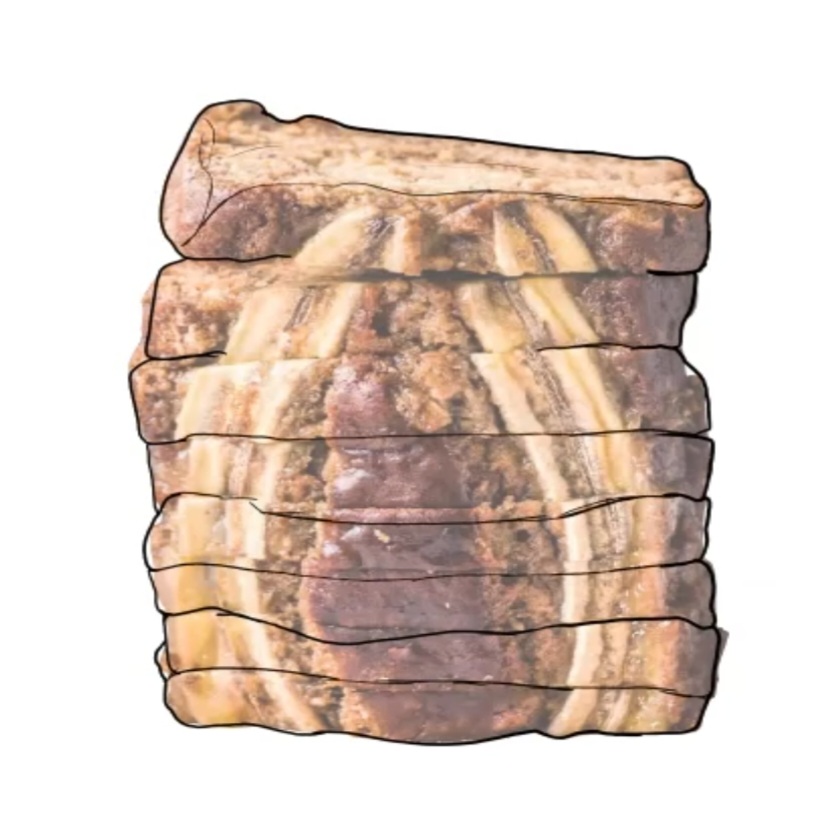
This years tea will be named ‘BBC’ after its primary flavor notes of Banana Bread and Caramel
Foreword:
Selling the teas that are meant to be this ‘zenith’ can be a little frustrating because in years that they don’t seem to climb to the heights of the past, they’re disappointing in comparison. Another thing that’s frustrating about them is the small scale they’re made on, and how unstable the path is for me to bring them to Canada. On the other hand, how human they are –the first jin jun mei I loved became unavailable due to a fight between the broker and the farmer, the second because the person getting the tea for me in China had to leave the country, and without a Chinese phone number her ability to contact this farmer via the Chinese apps was lost.
Jin Jun Mei is supposed to represent the ideology that not having negatives inherently makes something good. A tea with no negatives, like a person with no negatives, is a rare sight. Negatives help frame the character of something, but without that frame the canvas can stretch on, this is one of those things that makes great tea so great — the fragrance is not confined to a small bordered area, it can really bleed out and mesh with the world of imagination; it’s boundless.
All that to say, I haven’t sold jin jun mei in this shop for about 2 years, I really missed it, and I’m glad to have it back. This one carries a fragrance that I haven’t experienced in this style before — banana bread. I will spend the next while brewing this to learn to coax the maximum amount of that out. Surely there are ways to hide that, to bring about more of a pound-cake, brown sweet, honey flavor, but banana is novel. Alas my notes will eventually be down below.
I’ve only been drinking tea ‘professionally’ for 10 years, so whos to say I actually know anything about this on the grand scale. When I first drank this tea I found my opinions of what it was ‘supposed to be’ have become sort of rigid. ‘Jin Jun Mei should be honeyed, and biscotti-esque, and deviation from that flavor set is wrong.’ Ho ho ho — look at me’, Mr. Professional taster thinks he knows stuff! I took a step back with humility.
In fact, for someone seeking that honey-biscotti flavor set, this years ‘Matryoshka’ Giant Golden Needles covers that beautifully. So I’m glad jin jun mei is doing something different, it would be a shame for this to enter the shop “just to be a better version of something else”.
I’d also like to admit that I’m probably overpaying for the Matryoshka. It is an excellent tea, and I do wholeheartedly believe its worth that cost, but jin jun mei is at least 10x more work to pick and still somehow cheaper. In this case, what I can say for sure is the broker whom I’m purchasing this through and my goals are aligned, we want to spread the best tea we can to the most people possible, for world happiness and satisfaction first, and money second. Anyway, take from that what you will.
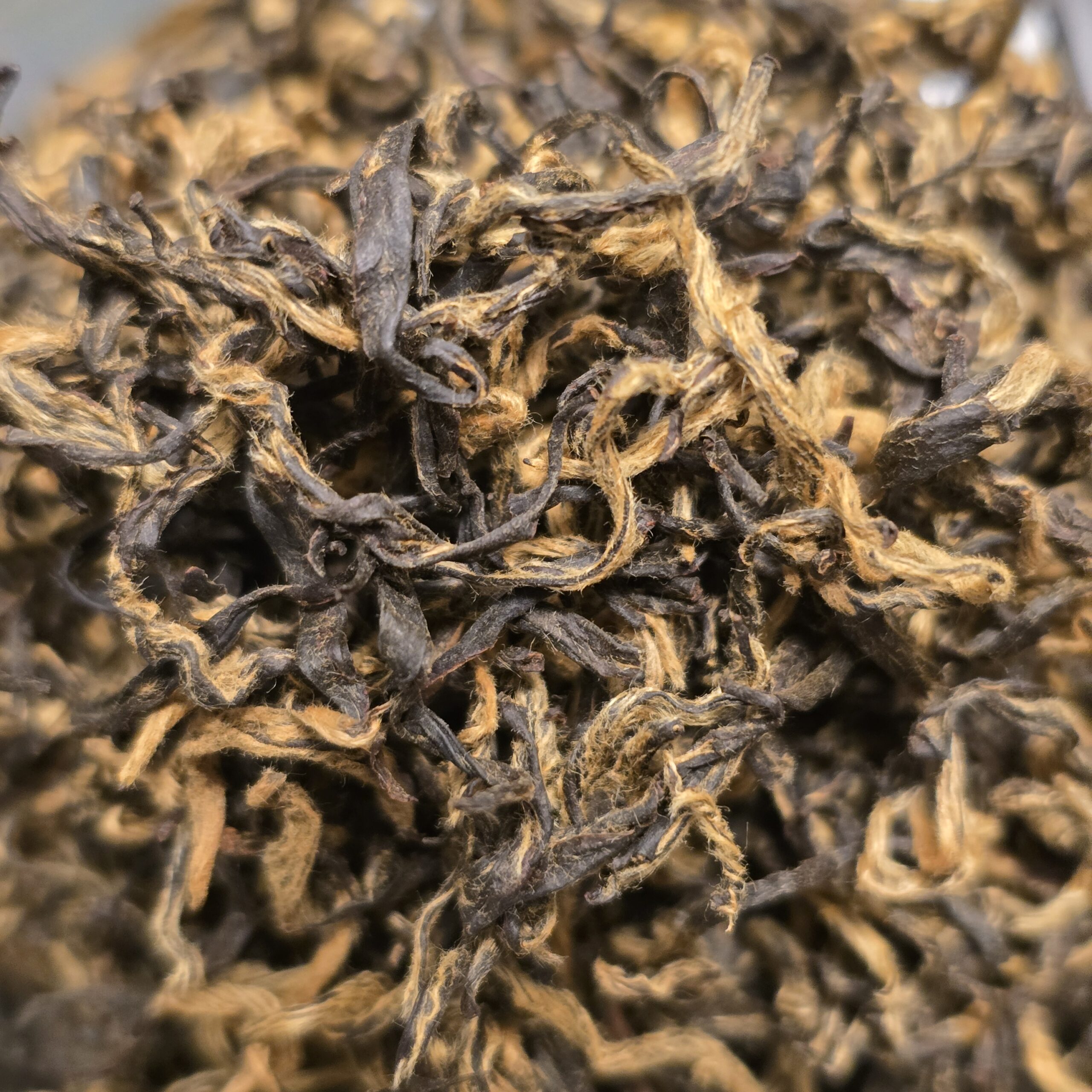
I usually like to see a bit more golden pekoe than this
The village which produces authentic Jin Jun Mei and Lapsang Souchong is called Tong Mu Guan. ‘Guan’ means village, I’m going to omit it for the rest of the article in favor of writing ‘village’. It’s a small village of approximately 2000 residents, the vast majority of whom are tea makers or at least it’s likely they are related to one. Tong Mu Guan is culturally significant to black tea (better known as ‘red tea’ in China) because it is this archetype’s birthplace. Today it exists within a UNESCO world heritage site which is protected by the Chinese government, not necessarily for the sake of tea production, but it’s a nice bonus. For the sake of the rest of the article, I will refer to this ‘red tea’ as a ‘black tea’ because my target audience is more familiar with this term (I would call it a black tea myself).
The following story is somewhat of a legend. A recent book I purchased points out that this story (while it is well known) cannot be proven because documents that support it do not exist.
The Legend pertaining to Black Tea:
Black tea was first created by tea manufacturers trying to make the best of a bad situation. Once upon a time in feudal China farmers from a village called Tong Mu on the border between the warring states of Fujian and Jianxi were harvesting their tea leaves in an ordinary fashion. As this village is in the heartland of the Wu Yi mountains, they could have very well been picking tea to make a dark oolong style, but for the sake of this story, it’s said their goal was to make green tea.
The Fujianese farmers noticed the Jianxi army approaching from the North and decided to return to their homes and wait out any passing trouble. While the army was passing through the area they took a rest at the tea facility. Some soldiers laid on the tea leaves spread out by the farmers, others kicked the leaves around, stepped on them, generally caused grief for the farmers, and eventually left. By the time the farmers could go out and survey the damage created by the Jianxi army, the tea leaves had already become wilted and black. Leaves in this condition are unacceptable to produce a good quality tea. To the farmers, these tea leaves represent a large portion of their annual income; and since they depended on that to sustain themselves they carried out the production of the tea although they were certain they would not receive a good price for it.
In tea production, the final drying of tea leaves is traditionally carried out using the heat from charcoal as there is very little smoke. In this unfortunate situation, the farmers didn’t feel as if they had enough time to get the charcoal prepared. A fire was built using fresh pine branches and the tea leaves were dried over the heat and smoke. When the tea was finished, it was the first of its kind. Dried black leaves which reeked of smoke, totally alien to a pure fresh fragrance which was the original goal. Locally the farmers knew that no one would purchase or enjoy this tea. The farmers sent an envoy with the tea to the port cities of Fujian which would trade with Europe. The envoy pleaded the farmer’s case and was paid an extremely low price for his tea, better than nothing though. Europeans ended up enjoying the tea very much and requested for it to be made for the foreseeable future. This tea was and has continued to be called Lapsang Souchong.
Due to the opium wars that the British had with China, the British took the knowledge they have gained of tea production from the Chinese and established plantations in India as a way to shift production away from China. Plantations were set up in fertile plains of Assam and the famous terms used today such as ‘Orange Pekoe’ and ‘English Breakfast’ came into being. Once the plantations could manage a stable production and the quality of the tea wasn’t complete garbage, the British bought less and less Chinese tea in favor of their patriotic “British tea”. Tong Mu which by now specialized in black tea production almost exclusively for the British was in a tough situation. China as a whole still enjoyed the light flavors and fragrance of green tea and disliked the bold intense flavors of lapsang souchong. Farmers that still made the smokey Lapsang Souchong could still sell it to the Russians and Americans, others would return to producing oolong or try to make less smokey styles of black tea that would hopefully intrigue the domestic market.
The tea was rolled out by hand and left to oxidize before eventually being dried over charcoal. The following day upon tasting the tea everyone noted the quality. It was exceptional, but. As the picking is so incredibly time-consuming and detailed, the price of the tea to make a profit should be extremely high. For a market without much interest in black tea to begin with, and with western markets not willing to pay the high prices for quality tea that the Chinese themselves would pay, the factory would have to, unfortunately, decline to produce such an amazing product. The merchants took on a business partner specializing in marketing and commissioned a few kilograms of tea to be made as gifts for China’s elite influencers (politicians, actors, etc). They started a snowball which came to be what is considered the best black tea in the world — Jin Jun Mei (Those Chinese characters translate literally to Gold, Fine Quality Horse, Eyebrows). It now has a cult-like following and is extremely hard to get good versions outside of China due to the sheer demand for it domestically. There are a lot of fakes out there. Someone with experience looking at the dry tea leaf would probably be able to detect a fake from the size of the dried leaf, the amount of the golden color they see, and ultimately the quality and richness in the flavor.