
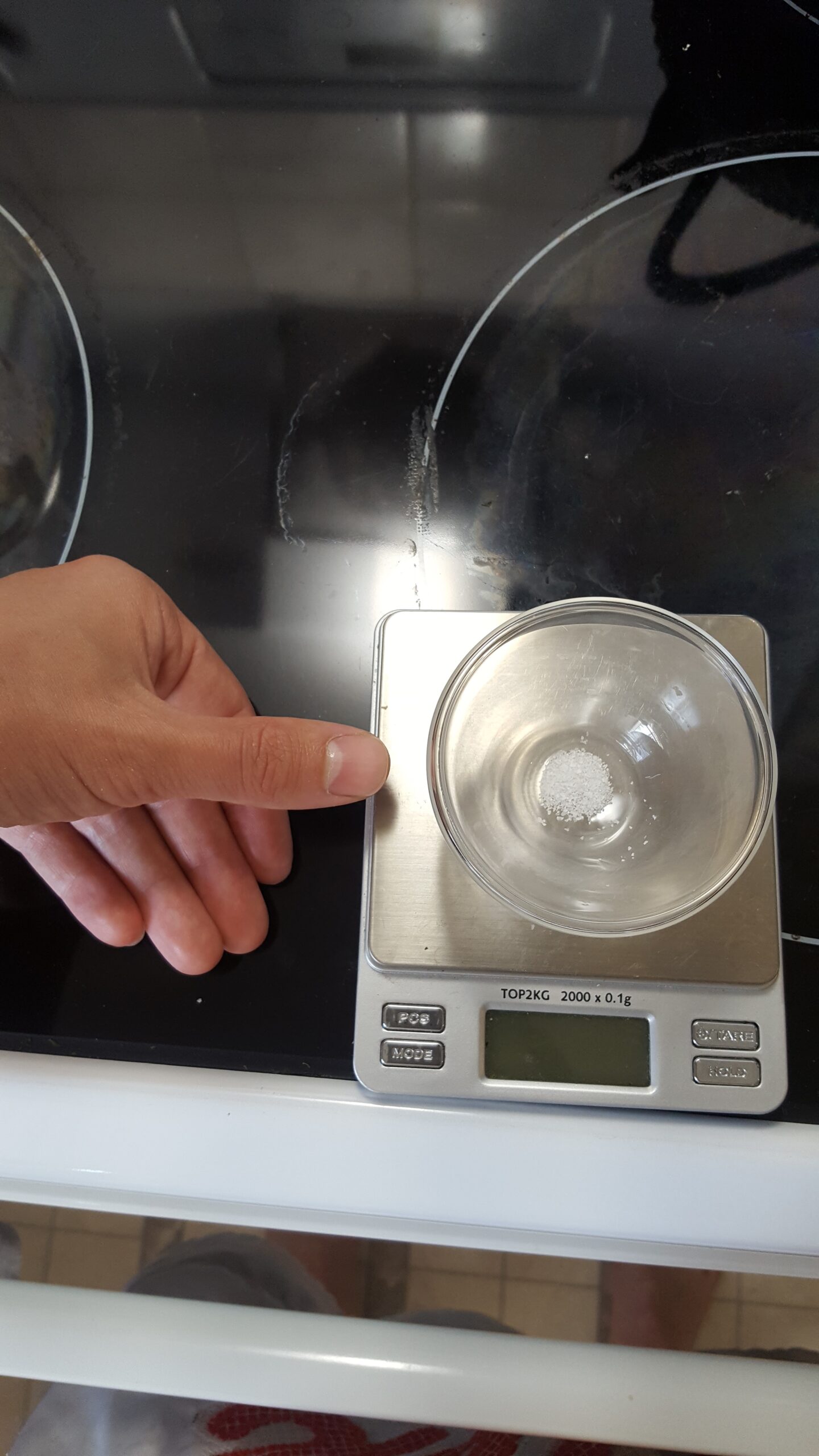
Above: 0.15g (roughly) of kosher salt, thumbnail for comparison.
Adding a pinch of salt to tea to improve its flavor was already common knowledge to tea drinkers by the year 806. This was because the tea of that time was frankly quite bitter and poorly made. I read about it in ‘The Tale of Tea’ and thought it was interesting but continued on in the book without giving it a second thought. I heard it mentioned again recently in a mei leaf podcast, at this time wheels in my head started turning but ultimately nothing came of it.
While sitting around one day those very same wheels started to move again and I wrote some questions down for future consideration. Seeing as I have plenty of time these days it didn’t take long to start experimenting. I have hit a roadblock though — I can see the path around it but I can’t get there without help.
For what I could answer:
Q: Can I taste salt in water at a ratio of 1:1000?
A: Yes, that’s incredibly easy. That is quite salty.
Q: Can I taste salt in water at a ratio of 1:2000?
A: Initially I thought it was easy but after a few cups I think I overestimated myself. I can’t actually taste it with any consistency. In a blind tasting I got 1/5 cups correct in salted water vs regular water in which 2 were salt and 3 were regular.
Q: If I use a ratio of 1:2000 salt water for tea, will it make a difference?
A: Obviously a one off test is not conclusive evidence but in a comparison of 2004 puerh brewed with salt water and normal water I could not taste the difference.
Q: How does tea taste when the salt water concentration is 1:1000?
A: You can feel the ‘dry heat’ from the salt but it doesn’t have to attached ‘salty’ flavor. It made the tea less exciting to drink though, it made the tea taste ‘flat’.
Where I hit the road block for my testing was with my equipment. I have 2 different scales that measure to 0.1g but neither of them will start registering the weight of salt below 0.3 — I may know of one person who has a scale which goes to 0.01 and if it works out I will continue this test. If not, I guess I’ll pass for now.
Some questions I would like to answer:
Q: What is the weakest ratio of salt:water that I can perceive with consistency?
A: ?
Q: What difference will salt water make when brewed at that ‘weakest perceived’ ratio with various teas?
A: ?
Q: Is there a tea which tastes better with salt water?
A: ?
Q: Is there a difference between types of salt in how they affect tea? eg Mineral vs Sea Salt
A: ?
Leave a Reply
I would love to hear from you